

Premium packaging can create return on investment through two main paths: revenue growth and cost savings.
Small businesses in 2024–2026 can see 10–20% sales lifts after upgrading from generic boxes to well-designed custom packaging.
ROI comes from higher conversion, repeat purchases, fewer damages, lower shipping costs, and stronger brand recognition.
Paper Tube, supported by Asymmetric Applications, helps brands turn cylindrical paper-based packaging into a profit center.
This guide shows how to calculate roi and decide whether a packaging investment makes sense.
Many businesses still treat packaging as a commodity expense. That is a mistake. Packaging is often the first physical interaction a customer has with a brand, and that first moment has a powerful impact on how they feel about the brand.
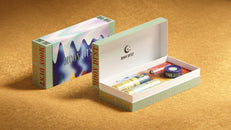
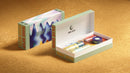
Premium packaging includes custom boxes, branded paper tubes, upgraded packaging materials, sustainable materials, eco-friendly materials, thoughtful inserts, and a packaging design that creates a positive first impression when the package hits the doorstep.
From Asymmetric Applications’ perspective, writing for Paper Tube, the goal is simple: treat packaging as a measurable growth lever, not just a protective shell.
Packaging choices typically deliver financial returns in two main categories: cost savings and revenue growth. For small businesses with tight cash flow, every dollar has to prove measurable value.
Well-designed packaging can increase in-store sales by up to 30%, making it one of the most effective ways to stand out on shelves. Strong packaging design can increase in-store sales by up to 30%, demonstrating its significant impact on consumer purchasing behavior.
That matters for e-commerce, too. Before the product arrives in a customer’s hands, packaging shapes consumer perception, product quality assumptions, customer trust, and purchasing decisions. A premium brand image can support higher sales, stronger brand identity, and more repeat purchases.
Packaging is a silent salesperson. In a crowded market, impactful packaging signals perceived value, aesthetic appeal, and brand values before the product is tested.
Custom packaging can increase in-store sales by up to 30%, making it a powerful tool for driving revenue growth. Products with premium packaging can see a sales increase of up to 40%, as customers perceive them as higher quality and are willing to pay more.
High-quality packaging also improves the brand experience. High-quality unboxing experiences can boost customer loyalty, repeat purchases, and user-generated social media marketing. Social media posts, reviews, and customer engagement can compound over time when the unboxing creates a lasting impression.
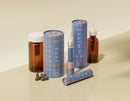
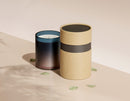
For example, a skincare or candle brand moving from plain cartons to printed paper tubes can use unique packaging to create an emotional connection, boosting sales while enhancing brand perception.

Custom packaging is not only about spending more. When engineered correctly, custom packaging solutions can reduce waste and create measurable savings.
Shipping savings from right-sized boxes or lighter materials often lower dimensional weight and carrier fees. Using custom-fit or smaller boxes can cut shipping costs as carriers charge based on package size, and eliminating excess air reduces freight rates. Using lighter materials or dimensionally optimized boxes can lower third-party shipping fees.
Custom packaging can reduce shipping costs by using less material and improving logistics, leading to measurable savings for businesses. By designing packaging specifically for products, businesses can minimize wasted space, use less material, and lower shipping costs, resulting in operational savings.
Damage reduction is another major lever. Fewer damaged products mean fewer replacements and refund costs, contributing to overall financial benefits. Reduced product damage can save money in refunds, replacements, and return shipping costs. Custom packaging designed to fit products reduces breakage during transit, which lowers return rates and improves profit margins.
To improve packaging ROI, small businesses should optimize box sizes to reduce dimensional weight fees and utilize automated packing tools. Packaging automation, automated packaging equipment, new packaging equipment, and the right packaging equipment can improve operational efficiency without adding excess packaging or unnecessary void fill.

Not all ROI appears in this quarter’s P&L. Premium packaging often creates long-term value through customer retention and stronger customer relationships.
Research indicates that more than half of consumers are more likely to become repeat buyers after receiving products in premium packaging, highlighting the importance of packaging in customer retention. Research indicates that over 50% of consumers are more likely to make repeat purchases when they receive products in premium packaging, highlighting its role in customer loyalty. Research shows that 52% of consumers make repeat purchases when they receive products in premium packaging, highlighting the impact of packaging on customer loyalty.
Sustainable packaging is also a brand loyalty driver. 90% of consumers are more likely to purchase from brands with sustainable packaging, indicating a strong consumer demand for eco-friendly options. Over 54% of consumers intentionally chose products with sustainable packaging in the last six months, and 39% switched brands specifically because of it.
Sustainable packaging can enhance brand perception, with 52% of shoppers choosing brands that use eco-friendly materials, which builds customer trust and loyalty. 58% of consumers are more likely to review and recommend products with eco-friendly packaging, indicating that sustainable packaging can drive social proof and advocacy.

To measure the effectiveness of packaging, businesses should track both revenue and cost savings after adopting custom packaging, reviewing sales data before and after implementation.
Start with baseline metrics: conversion rate, average order value, return rate, damage rate, shipping costs, fulfillment labor, customer feedback, customer satisfaction, and repeat purchase rate.
Use this formula: ROI (%) = Net Financial Benefit / Total Packaging Investment × 100. A small business can calculate the return on investment (ROI) of its packaging choices by dividing the net financial benefits by the total cost of the packaging investment, then multiplying by 100 to get a percentage.
For example, suppose a brand ships 2,000 units monthly. Upgraded paper tubes add $0.75 per order, or $1,500 monthly. Better fit saves $0.65 in freight, $0.20 in void fill, $0.10 in labor, and $300 in avoided damage. The monthly benefit is $2,200. Net benefit is $700. Packaging roi is 46.7% for that month before factoring in higher sales.
Run A/B tests when possible: standard packaging versus premium packaging during the same period. Compare customer experiences, reviews, social mentions, returns, and sales lift.

Premium packaging is strongest when the product is giftable, visual, high-margin, fragile, or tied to lifestyle. Cosmetics, specialty food, wellness products, candles, accessories, and premium ecommerce bundles often benefit most.
Low-margin products can phase in tailored packaging solutions on hero SKUs, seasonal bundles, or limited editions. This reduces the initial investment while testing the bottom-line impact.
The right decision depends on the target audience, profit margin, order volume, current damage rates, sustainability goals, and whether customers perceive packaging as part of product quality.
Working with packaging specialists prevents expensive trial and error. Paper Tube helps brands choose packaging solutions that support product protection, brand recognition, lower shipping costs, and sustainable practices.
Paper-based tubes can balance protection, beauty, and environmental values. They also help create a consistent brand identity across ecommerce, retail, and gifting.
Asymmetric Applications supports Paper Tube with a data-driven packaging strategy, helping connect design decisions to return on investment roi, customer loyalty, and measurable value.
Bring real numbers to a consultation: current unit cost, freight cost, damage rate, return rate, AOV, and sales data. Better inputs create better ROI modeling.

Small business owners usually ask practical questions before investing in high-quality packaging. Here are direct answers.
Early signs often appear in 1–3 months through customer feedback, reviews, and social media posts. Clearer financial return on investment usually needs 6–12 months of data.
Structural cost savings, such as less void fill, fewer returns, and lower shipping costs, can start immediately after launch.
Many consumer brands allocate 5–10% of the landed product cost to packaging. For a $30 item, an added $0.50–$1.00 can work if it improves customer retention or conversion.
Start with one hero product instead of redesigning the entire catalog.
Yes. Test a limited run of paper tubes, seasonal sleeves, or custom boxes against your current packaging.
Track review rates, damage rates, repeat purchases, and customer engagement between the two groups.
Premium does not have to mean wasteful. Sustainable materials, recyclable tubes, clear disposal cues, and less material can reduce impact while improving brand perception.
The biggest mistakes are over-designing, ignoring carrier fees, choosing unrecyclable materials, and failing to measure before-and-after performance.
Do not pick suppliers only by the lowest price. Poor fit can increase damage and erase cost savings.
Premium packaging can increase sales, reduce waste, improve brand loyalty, and strengthen brand recognition when it is tied to clear metrics.
Small businesses do not need massive budgets to start. Focused pilots, better packaging materials, and a smart packaging strategy can create outsized gains.
Every tube or box is a branded touchpoint. Speak with Paper Tube, through Asymmetric Applications, to model your next 12 months of packaging ROI.

Yes, when the tube uses the right wall thickness, closure, and insert. Product protection depends on engineering, not shape alone.
Yes. Retail brands should watch shelf conversion and an increase in store sales. E-commerce brands should track delivery conditions, unboxing response, returns, and repeat purchase behavior.
No. Short runs and phased launches make custom packaging realistic for small businesses that want controlled testing before a larger rollout.
Prepare order volume, current packaging cost, product dimensions, damage rate, return rate, shipping costs, and desired brand experience.


What is a "global PRO," and why are brands so cautious? Explore how organizations like the Circular Action Alliance are shaping cross-border EPR laws and how to adapt your packaging.