

California's packaging landscape changed permanently on May 1, 2026. That is the date the California Office of Administrative Law approved the permanent regulations implementing Senate Bill 54 — the Plastic Pollution Prevention and Packaging Producer Responsibility Act — and filed them with the Secretary of State. The regulations took effect immediately. For brands selling packaged goods in California, the transition from rule-making to implementation is now complete. What was once a planning exercise is now a compliance obligation.
If your brand uses single-use packaging — and it almost certainly does — here is what California SB 54 EPR regulations mean for you, what the deadlines look like, and why paper tube packaging is positioned well in this new regulatory environment.
Senate Bill 54, formally called the Plastic Pollution Prevention and Packaging Producer Responsibility Act, was signed into law in June 2022. It establishes California as the most aggressive state in the country on packaging reform, creating a comprehensive extended producer responsibility (EPR) framework that shifts end-of-life packaging costs from local governments and taxpayers directly onto producers — the brand owners, importers, and distributors who sell packaged goods into the state.
California EPR law 2027 is not a future abstraction. Full program implementation begins January 1, 2027, and the clock is already running on registration, reporting, and data obligations that feed directly into that launch date.
Unlike EPR laws in Colorado, Oregon, and Maine, California's SB 54 does not merely fund recycling systems. It requires producers to fundamentally redesign packaging. By 2032, every piece of single-use packaging sold in California must be recyclable or compostable, 65 percent of single-use plastic packaging must actually be recycled, and overall single-use plastic packaging must be reduced by 25 percent compared to 2023 baseline levels.
SB 54 producer obligations fall on any company that sells, distributes, or imports single-use packaging into California. The law assigns responsibility in a clear order: the brand owner who sells products under their name carries primary responsibility. If there is no identifiable brand owner, responsibility moves to the importer or distributor who first sells into California.
The practical effect is broad. If your product has a label on it and that product is sold in California, you are likely a producer under SB 54. Small producers with less than one million dollars in gross annual California sales may qualify for an exemption, but they are still required to register and apply for that exemption.
SB 54 covered materials include single-use packaging and single-use plastic food service ware. CalRecycle publishes and maintains a Covered Material Categories (CMC) list that organizes these materials for reporting, fee calculation, and design criteria. The list was updated on December 31, 2025, and now includes recyclability and compostability determinations as well as first-ever recycling rate determinations for each category.
Materials that fall into the covered category include most packaging formats brands use every day: plastic bottles, flexible pouches, plastic films, multi-layer laminates, foam food service ware, and more. Paper-based packaging that is fully recyclable or compostable is positioned very differently under SB 54's fee structure — more on that below.
California PRO registration for brands flows through the Circular Action Alliance (CAA), the state's sole approved producer responsibility organization. CAA manages producer registration, collects and processes supply data, develops the statewide program plan, and will administer the fee collection process beginning in 2027.
CalRecycle EPR requirements establish three compliance pathways for producers:
•Register with CAA and submit supply data if participating through the PRO — the primary pathway for most brands.
•Register with CalRecycle directly and apply as an independent producer if complying individually.
•Register with CalRecycle and apply for the small producer exemption if annual California gross sales are under one million dollars.
On June 15, 2026, CAA submitted its draft California Program Plan to the Packaging Producer Responsibility Advisory Board. This plan, which will be finalized with fee rates by October 2026, is the operational blueprint for how California's EPR program runs — what it costs, how fees are allocated by material type, and how the $500 million annual mitigation fund obligation will be distributed among producers.
•May 1, 2026: Permanent SB 54 regulations approved and effective.
•June 1, 2026: Initial deadline for producers to register with CAA or CalRecycle and submit supply data.
•May 31, 2026: 2026 California Producer Report and 2026 Annual Source Reduction Report (both using 2025 data) due to CAA.
•July 1, 2026: California baseline producer report (2023 data) due.
•August 1, 2026: Individual Source Reduction Plans due (exact date TBC by CAA).
•August 14, 2026: End of public comment period on CAA program plan.
•October 1, 2026: CAA program plan to be finalized with final fee rates.
•January 1, 2027: CalRecycle approves plan, EPR program officially begins.
•March 1, 2027: PRO remits initial California plastic pollution mitigation fund fees.
Beginning in 2027, the Circular Action Alliance will collect fees from producers to fund the California Plastic Pollution Mitigation Fund — five billion dollars over ten years, at $500 million annually. These are not fees paid directly by individual brands to the state; they are collected through the PRO and allocated based on each producer's share of covered materials and the recyclability profile of their packaging.
The critical financial incentive embedded in SB 54 is this: packaging that is harder to recycle attracts higher fees. Packaging that is already recyclable, compostable, or made of paper-based materials is positioned to carry lower fee exposure. Brands that are still using single-use plastic packaging in 2027 will face the largest compliance costs.

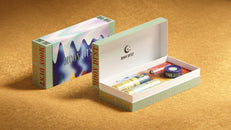
This is where brands using paper tube packaging have a meaningful structural advantage under California SB 54 EPR regulations. Paper tubes are manufactured from FSC-certified paper, are fully compostable and biodegradable, and use vegetable-based inks. They are not single-use plastic. They are not the target of SB 54.
Brands that have already transitioned to paper tube packaging have, in many cases, already solved the compliance problem SB 54 is designed to create. Their packaging is the kind the law is trying to encourage. Their fee exposure under the 2027 fee structure is expected to be meaningfully lower than brands relying on plastic packaging formats.
For brands still evaluating the switch from plastic or composite packaging to paper, the SB 54 cost structure — which will make non-recyclable packaging progressively more expensive to put on the market — provides a financial framework that makes the business case for paper packaging even clearer.
Paper Tube Co.'s full portfolio ofcustom and ready-made paper tube packaging is FSC certified, compostable, and biodegradable — positioned exactly where SB 54's incentive structure points.
California's extended producer responsibility framework does not operate in isolation. SB 343 — California's truth-in-labeling law — restricts use of the chasing arrows recycling symbol and any recyclability claims to packaging that meets strict statewide infrastructure criteria. SB 343's compliance deadline is October 4, 2026.
Because SB 54 incorporates SB 343's recyclability determinations into its fee structure, packaging that fails SB 343's recyclability test will also attract higher EPR fees under SB 54. The two laws must be understood together. Brands auditing their packaging for SB 54 compliance should simultaneously be auditing their labels for SB 343.
California SB 54 is the Plastic Pollution Prevention and Packaging Producer Responsibility Act, signed into law in 2022. It establishes an extended producer responsibility (EPR) program for single-use packaging and plastic food service ware sold in California. Permanent regulations took effect on May 1, 2026, and full program implementation began January 1, 2027.
Any brand owner, importer, or distributor that sells single-use packaging or single-use plastic food service ware in California must comply. This includes brands headquartered outside California. Small producers with under one million dollars in annual California gross sales may qualify for an exemption but must still register.
Producers must take one of three actions: register with Circular Action Alliance (CAA) as a PRO participant and submit supply data; register with CalRecycle as an independent producer; or register with CalRecycle and apply for the small producer exemption. The initial registration deadline was June 1, 2026.
The Circular Action Alliance is California's sole approved producer responsibility organization (PRO) under SB 54. CAA manages producer registration, collects supply data, administers fees, and submitted its draft California Program Plan to the state on June 15, 2026. Final fee rates are expected in CAA's plan by October 2026.
Fee collection under California SB 54 begins in 2027. The PRO will collect $500 million annually from 2027 through 2037 for the California Plastic Pollution Mitigation Fund, totaling five billion dollars over ten years. Producers fund this through fees based on their covered material volume and packaging recyclability.
By 2032, SB 54 requires that 100 percent of single-use packaging sold in California be recyclable or compostable, that 65 percent of single-use plastic packaging achieve actual recycling rates, and that overall single-use plastic packaging be reduced by 25 percent compared to 2023 baseline levels.
Paper tube packaging is not single-use plastic and is not the primary target of SB 54's most stringent requirements. FSC-certified, compostable, and biodegradable paper packaging is positioned favorably within SB 54's eco-modulated fee structure, which penalizes packaging that is harder to recycle and rewards packaging that is recyclable or compostable.
SB 54 and SB 343 work together. SB 343 restricts the use of the chasing arrows symbol and recyclability claims to packaging that meets CalRecycle's statewide infrastructure criteria. SB 54 incorporates those determinations into its fee structure — packaging that fails SB 343's recyclability test will face higher EPR fees under SB 54.


What is a "global PRO," and why are brands so cautious? Explore how organizations like the Circular Action Alliance are shaping cross-border EPR laws and how to adapt your packaging.


Which States Are Next for EPR Packaging Laws? (New York, New Jersey & More) breaks down active legislative momentum, state needs assessments, key timelines, and compliance steps.