

The May 31 EPR reporting deadline has passed. If you’re a brand that ships physical products in the United States, there’s a good chance you just filed or should have filed packaging data with a Producer Responsibility Organization under one of the country’s growing Extended Producer Responsibility programs. Oregon, Colorado, and California are already live or in rulemaking. More states are coming.
But here’s the thing about EPR: the filing deadline is the easy part. The harder, more consequential work starts now.
The data you submitted is essentially a snapshot of your packaging footprint. And that footprint, the weight, the material composition, the recyclability, the recycled content, is the exact input that determines how much you owe in annual fees, sometimes called dues, in 2027 and beyond.
This guide is for brand managers, packaging directors, and founders who want to understand exactly how EPR fees are calculated and what packaging changes will move the needle on cost. We’ll walk through how eco-modulation works, which materials and attributes actually lower fees, and how switching to sustainable paper tube packaging is one of the most strategic moves a product brand can make right now.
What Is EPR and Why Your May 31 Filing Matters
Extended Producer Responsibility (EPR) is a policy framework that shifts the financial burden of end-of-life packaging management from local governments and taxpayers to the companies that put packaging into the market. In plain terms: if you sell a product in a state with an EPR law, you pay into a system that funds recycling, collection, and waste diversion.
In the United States, EPR for packaging is no longer a future concern. Oregon’s Plastic Pollution and Recycling Modernization Act, Colorado’s HB22-1355, and California’s SB 54 are the three most active programs. Each operates slightly differently, but all share a common structure:
The May 31 reporting deadline is when brands submit SKU-level or category-level data on the packaging they placed on the market during the prior calendar year. That data is not just a compliance checkbox; it is the direct input for your fee calculation. The more packaging you report, the more you’ll owe. And within that, the material mix you reported will determine whether eco-modulation works for you or against you.

Eco-modulation is the mechanism through which EPR programs reward or penalize packaging based on its environmental profile. Think of it as a multiplier applied to your base fee. Packaging that is easy to recycle, made from recycled content, or compostable typically receives a fee reduction. Packaging that is difficult to recycle, contains problematic additives, or is made entirely from virgin materials often receives a fee increase.
The specific eco-modulation criteria vary by state and PRO, but the categories that consistently appear across Oregon, Colorado, and California include:
Is the packaging collected and recycled at a meaningful rate in the state’s infrastructure? Packaging that passes a recyclability assessment, meaning it can be collected, sorted, and processed, qualifies for lower fees. Packaging that is technically recyclable but not practically so at scale does not.
Packaging that incorporates a meaningful percentage of post-consumer recycled material receives fee reductions. The higher the PCR content, the greater the potential reduction. This incentivizes demand for recycled material, which in turn supports the economics of the recycling system.
Packaging certified as compostable or biodegradable, particularly where composting infrastructure exists in the state, is generally treated favorably. Paper-based packaging often qualifies here, especially when certified under recognized standards like FSC.
Because fees are assessed per unit of weight of covered material placed on the market, reducing packaging weight directly reduces your fee base. Even a modest reduction in packaging weight across a high-volume SKU can produce meaningful fee savings at the annual scale.
Most EPR programs include penalty tiers for materials considered problematic, typically certain plastics, multi-material laminates that cannot be separated for recycling, and packaging with certain chemical additives. If any of your packaging falls into these categories, the eco-modulation multiplier increases your fees significantly.
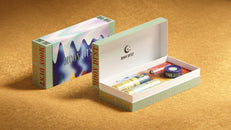
Paper tube packaging checks nearly every box that EPR eco-modulation rewards. And for brands in beauty, candles, coffee, cannabis, skincare, and apparel, the categories where paper tubes are most commonly used, the packaging switch is not a sacrifice. It is an upgrade.
Here is how paper tube packaging maps to the eco-modulation criteria that lower fees:

The brands that will face the highest EPR fees in 2027 are not the ones that sell the most products. They are the ones that ship the most problematic, non-recyclable packaging. Brands that proactively align their packaging with eco-modulation criteria will see a measurable difference in their annual dues.
If you’re evaluating a packaging switch as part of your EPR compliance strategy, start with a custom packaging quote. Or if you need tubes fast, our ready-made line ships with no minimum order.
The window between now and your next reporting period is your opportunity. Here’s a practical framework for brands that want to reduce what they owe in 2027.

Go back to the data you filed on May 31. Break it down by SKU or product line. Which SKUs contributed the most covered material weight? Which materials did you report, and how do those map to the eco-modulation schedule your state PRO uses? The goal is to identify your highest-fee packaging lines and quantify the fee exposure before assigning any redesign budget.
If you are unsure whether your current packaging passes recyclability standards in your relevant states, request a formal assessment. State PROs and their material characterization consultants can provide this. Do not assume recyclability based on the “chasing arrows” symbol. EPR programs require evidence of actual end-market recyclability, not just resin coding.
The math is straightforward: the highest-impact redesigns are the ones that reduce covered material weight and improve eco-modulation scores simultaneously. If you have a SKU shipping in a non-recyclable plastic outer tube or a multi-layer laminate canister, the shift to an FSC-certified paper tube addresses both levers at once.

If you are ordering custom packaging, you require a minimum post-consumer recycled content percentage in your specifications. This is a conversation to have with your packaging supplier during the design phase, not after production. Ask what PCR content is achievable in the substrate and document it for your next EPR filing.
EPR reporting increasingly requires SKU-level data, not just aggregate tonnage. Build internal tracking systems that capture packaging weight, material composition, PCR content percentage, and recyclability status per product. When May 31 comes around again, you will have the data in the format the PRO needs, and the eco-modulation credits that lower your fees will be fully documented and defensible.
Not every brand is in a position to launch a full custom packaging redesign in the next twelve months. That’s exactly why the ready-made tube line exists. No minimum order. In stock. Compostable and recyclable. If you need to move a high-volume SKU to a paper-based package quickly, the ready-made line removes every barrier. And with screen-printing now back as an option, your brand identity does not have to wait for a custom run.
While EPR for packaging is a national trend, the active programs are state-by-state. Here is a brief overview of the three most relevant programs for brands with U.S. distribution:
Oregon was the first U.S. state to pass a comprehensive EPR for packaging. The program requires producers to join a PRO, report covered materials, and pay annual fees based on reported data. Eco-modulation criteria are built into the fee structure, and non-recyclable plastics carry fee premiums. Brands selling into Oregon and reporting through the CAA (Circular Action Alliance) reporting process should prioritize recyclability improvements for their Oregon-distributed SKUs.
Colorado’s program mirrors Oregon’s structure in several ways, with annual dues assessed through a PRO and eco-modulation applied to packaging attributes. Colorado’s program is particularly focused on reducing single-use plastic packaging and incentivizing reusable and recyclable alternatives. Paper packaging consistently performs favorably under Colorado’s fee calculation methodology.
California’s SB 54 is the largest and most complex of the three active programs. It requires covered producers to achieve a 25% reduction in single-use plastic packaging by 2032, with interim milestones. Fee structures under SB 54 include both a base assessment and an eco-modulation component. California’s program also includes a mitigation fund mechanism that can reduce fee exposure for producers who demonstrate packaging improvements. Given California’s market size, the SB 54 compliance strategy is particularly consequential for brands with national distribution.

The Business Case: EPR Fee Reduction Is Just Part of the ROI
Reducing EPR fees is a compelling reason to upgrade your packaging, but it is not the only one. The brands that are proactively switching to premium paper tube packaging are doing so because the ROI goes beyond the compliance ledger.
Higher perceived value:Premium paper tube packaging commands attention at retail and online. Research consistently shows that the unboxing experience influences repurchase intent and social sharing behavior.
Paper Tube Co. has been making packaging that serves all of these goals simultaneously since 2013 for clients including Nike, Adidas, Sephora, and hundreds of independent artisans. The custom packaging path is designed for brands ready to commit to 1,000+ pieces with full structural engineering and brand identity support. The ready-made pathis designed for brands that need to move now, without minimums.
Eco-modulation is a fee adjustment mechanism built into EPR programs that increases or decreases a producer’s base fee based on the environmental profile of their packaging. Packaging that is recyclable, contains post-consumer recycled content, is compostable or biodegradable, and uses low-toxicity materials qualifies for fee reductions. Packaging made from non-recyclable materials, problematic plastics, or multi-material laminates that cannot be separated typically receives fee increases. Eco-modulation is the primary tool producers can use to actively reduce EPR packaging fees rather than simply paying the standard rate.
EPR packaging fees are calculated based on the weight and type of covered packaging materials a producer places on the market in a given reporting year. The base fee is determined by multiplying covered material weight by the per-ton fee rate set by the Producer Responsibility Organization (PRO). Eco-modulation factors are then applied as multipliers that increase or decrease the base fee depending on recyclability, recycled content, and material composition. The result is an annual dues amount that reflects both how much packaging you ship and how environmentally favorable that packaging is.
Yes. Switching from non-recyclable plastic or multi-material packaging to FSC-certified, compostable, recyclable paper tube packaging directly reduces EPR fee exposure in two ways. First, paper tubes are typically lighter than equivalent plastic or rigid packaging, which reduces the total covered material weight reported to the PRO. Second, paper tubes score favorably under eco-modulation criteria they are recyclable, often biodegradable, free of problematic additives, and can incorporate post-consumer recycled content. Both factors lower the fee calculation compared to non-recyclable alternatives.
The packaging attributes that consistently lower EPR fees under eco-modulation rules across Oregon, Colorado, and California include: (1) recyclability verified through a formal recyclability assessment, (2) incorporation of post-consumer recycled (PCR) content, (3) compostability or biodegradability certified to recognized standards, (4) use of vegetable-based or non-toxic inks and coatings, (5) reduced packaging weight, and (6) avoidance of materials classified as problematic by the relevant PRO. Paper tube packaging from companies like Paper Tube Co. meets most or all of these criteria.
The Circular Action Alliance (CAA) operates the national reporting infrastructure that many state EPR programs use to collect covered materials data from producers. Brands report packaging data typically at the SKU level or by material category through the CAA’s online reporting platform. The CAA then transmits this data to the relevant state PROs, which use it to calculate annual dues. The May 31 annual deadline applies to data reported through the CAA for the prior calendar year’s packaging placed on the market.
Paper Tube Co. uses FSC-certified papers, which verify responsible forest sourcing and align with the environmental credentials that EPR eco-modulation programs reward. Paper tube packaging is generally accepted as recyclable in the curbside collection systems operating across Oregon, Colorado, and California. Paper tubes are also compostable and biodegradable, which provides additional favorable treatment under certain state eco-modulation schedules. Brands using Paper Tube Co. packaging should document the FSC certification and material specifications in their EPR reporting systems.
The ideal time to initiate packaging redesign for EPR fee reduction is immediately after submitting your annual EPR report, which for most producers means starting in June or July of each year. Packaging changes implemented and in production before the end of the current calendar year will be reflected in the following year’s covered materials data. For custom paper tube packaging with a 6+ week production timeline, initiating the process in mid-year gives brands enough time to launch new packaging before year-end and begin reporting the improved packaging footprint in their next annual filing.
A Producer Responsibility Organization (PRO) is the entity established under EPR law to manage the collection of fees, administration of recycling programs, and enforcement of producer obligations. Brands registered under an EPR program pay their annual dues to the PRO, which then funds municipal recycling programs, end-market development, and collection infrastructure. The PRO sets or implements the fee schedule including eco-modulation criteria, based on the state’s regulatory requirements. In the United States, the three active state programs each work with PROs operating under state oversight. Understanding your PRO’s specific eco-modulation schedule is essential to identifying which packaging changes will produce the greatest fee reduction.

Your May 31 filing is done. The next twelve months are the window where packaging decisions made today will be reflected in next year’s data and in your 2027 EPR fee assessment.
Brands that treat packaging as a cost center will keep paying the default EPR fee rate. Brands that treat packaging as a strategic asset, one that can simultaneously reduce regulatory costs, elevate the unboxing experience, and signal genuine sustainability credentials will come out ahead on every dimension.
Paper Tube Co. has been making packaging that gets noticed since 2013. FSC certified. Compostable. Biodegradable. Vegetable-based inks. One tube at a time, we are planting trees and giving brands the packaging infrastructure to thrive in a world where eco-modulation is the new normal.


What is a "global PRO," and why are brands so cautious? Explore how organizations like the Circular Action Alliance are shaping cross-border EPR laws and how to adapt your packaging.


Which States Are Next for EPR Packaging Laws? (New York, New Jersey & More) breaks down active legislative momentum, state needs assessments, key timelines, and compliance steps.